
Overview and Business Fundamentals
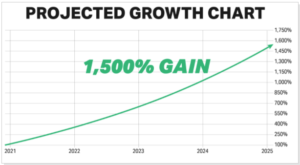
Netflix, Inc. (NASDAQ: NFLX) is the world’s leading streaming entertainment service, with over 260 million paid subscribers in 190+ countries as of year-end 2023 ([1]). The company enjoyed reaccelerated growth in 2023, with revenue rising 12% (vs. 6% in 2022) and operating margin expanding to 21% ([2]). This momentum continued into 2024 – Netflix’s global paid memberships surpassed 300 million by Q4 2024 after a record 18.9 million net new subscribers in that quarter ([3]) ([4]). Netflix’s core strategy remains producing compelling original content and continuously improving its platform to attract and retain subscribers ([1]). Given its first-mover advantage and vast content library, Netflix has dominated streaming over the past decade (the stock is up ~1,530% in ten years) ([4]). The key question now is whether Netflix’s stock – at today’s valuation – offers the best opportunity heading into 2026. To answer this, we examine its dividend policy, cash flows, leverage, valuation, and risks.
Dividend Policy and Shareholder Returns
Dividend History: Netflix has never paid a cash dividend on its stock and does not anticipate paying any dividends in the foreseeable future ([1]). Management has consistently reinvested earnings into content production and growth initiatives rather than returning cash via dividends. As such, Netflix’s dividend yield is 0%, which may deter income-focused investors. The company explicitly stated in its latest 10-K: “We have never declared or paid any cash dividends on our capital stock, and we do not currently anticipate paying any cash dividends in the foreseeable future.” ([1])
Share Buybacks: Instead of dividends, Netflix began returning capital to shareholders via stock repurchases once its cash flows turned positive. In March 2021, the board authorized a $5 billion buyback program, and in September 2023 an additional $10 billion was authorized (both with no expiration) ([1]). Netflix repurchased 14.5 million shares for about $6.0 billion in 2023, the first major buyback in its history ([1]). This left $8.4 billion authorized for future repurchases as of end-2023 ([1]). These buybacks signal management’s confidence in the company’s financial strength and aim to enhance shareholder value (by reducing share count). However, with no dividend likely before 2026 ([1]), investors seeking direct income may need to rely on potential stock price appreciation or the indirect benefit of repurchases.
Cash Flows and Profitability (AFFO/FFO Equivalents)
Free Cash Flow (FCF): After years of heavy spending on content led to negative free cash flow, Netflix’s cash generation has improved dramatically. In 2023, Netflix reported free cash flow of $6.93 billion, a surge from $1.62 billion in 2022 ([1]). This jump was driven by higher operating profits and lower cash content spending (partly due to production delays from industry strikes) ([1]) ([5]). Netflix’s operating cash flow hit $7.3 billion in 2023, up from $2.0 billion the year prior ([1]). Notably, the company’s free cash flow exceeded its net income in 2023, reflecting the timing benefits of content amortization and controlled working capital ([1]). Management expects to remain free cash flow positive going forward, given moderated content investment growth and rising revenue. Even excluding one-time strike effects, Netflix’s 2023 free cash flow would have been on the order of ~$4 billion, and S&P projects over $4 billion of annual FCF in 2024 with growth beyond ([5]). In short, Netflix has evolved from a cash consumer to a reliable cash generator – a pivotal development for investors.
Earnings and Profitability: Netflix’s profitability is also improving. Operating income was $7.0 billion in 2023, up ~23% year-over-year ([2]), and net income was roughly $5.1 billion (diluted EPS of ~$11.80, up from ~$9.95 in 2022). The operating margin reached 21% in 2023, up from 18% a year prior ([2]), as the company benefited from revenue growth and better cost absorption. For 2024, Netflix management guided to a 24% operating margin (on a F/X-neutral basis) ([2]), and longer-term aims to “steadily increase our operating margin each year” ([2]) ([2]). These trends underscore that Netflix is no longer just a top-line growth story – it is now delivering substantial earnings and FCF, improving its ability to self-fund content and shareholder returns. Importantly, Netflix’s accounting differs from some companies that use FFO/AFFO (funds from operations) – in Netflix’s case, free cash flow is the closest analog, and that metric is strong and growing.
Leverage and Debt Maturities
Debt Levels: Netflix carries a significant but manageable debt load. As of December 31, 2023, the company had $14.54 billion in outstanding senior unsecured notes (gross long-term debt) ([1]). This debt level has been roughly flat in recent years – Netflix has not added net new debt since pivoting to positive free cash flow. The notes are fixed-rate and were all issued at par, with interest rates ranging roughly from 3% to 6% ([1]) ([1]). Netflix’s weighted average interest rate on debt is around mid-4%, and total interest expense was $700 million in 2023 (just 2% of revenues) ([1]). Given 2023 operating income of $7 billion, interest coverage is very comfortable (10×+) – indicating that annual EBIT could cover annual interest expense more than ten times over.
Maturity Profile: Netflix’s debt maturities are staggered over the next 5+ years, with no large near-term cliffs. The nearest maturity is a $400 million 5.75% note due March 2024 ([1]) (which presumably has been or will be repaid or refinanced). In 2025, about $1.8 billion of notes come due (including $800 million in Feb 2025 and two ~$500 million tranches in June 2025) ([1]). 2026 brings a $1.0 billion maturity (Nov 2026) ([1]), and 2027 about $1.43 billion (May 2027) ([1]). The bulk of debt matures in 2028-2030, including multiple billion-dollar notes in 2028 and 2029 ([1]) ([1]). This laddered schedule gives Netflix flexibility to handle obligations with internal cash generation or opportunistic refinancing. Additionally, Netflix maintains a $1 billion revolving credit facility (undrawn as of 2023), which provides backup liquidity and matures in June 2026 ([1]). The company’s latest disclosure notes $1.08 billion of principal and interest due in the next 12 months and ~$16.66 billion due beyond 12 months ([1]) – which includes interest payments on long-dated notes.
Cash & Net Debt: Netflix’s liquidity position is strong. The company held $7.14 billion in cash, equivalents and short-term investments at 2023 year-end ([1]). Subtracting this cash, net debt is approximately $7.4 billion, which is modest relative to Netflix’s EBITDA and market cap. Netflix’s net leverage ratio is about ~1× (net debt ~$7.4B vs. 2023 EBITDA on the order of $7–8B), while gross debt/EBITDA is around 2× – a huge improvement from a few years ago when cash flows were negative. S&P Global Ratings calculates Netflix’s adjusted leverage at only 1.2× as of mid-2023 and expects it to remain below 1.5× going forward ([5]) ([5]). Netflix has also articulated a conservative financial policy, targeting gross debt in the $10–15 billion range and maintaining a cash buffer about equal to two months of revenue (~$5–6 billion) ([5]). This discipline has bolstered Netflix’s credit profile, allowing it to turn investment-grade.
Credit Ratings: Reflecting its stronger finances, Netflix’s debt has recently been upgraded by rating agencies. S&P upgraded Netflix to ‘BBB+’ (a high investment-grade rating) in 2023, citing improved margins, strong cash flows from the password-sharing crackdown, and prudent debt levels ([5]) ([5]). Moody’s also upgraded Netflix in 2025 to an A3 rating (equivalent to low A-range credit) ([6]). These ratings imply Netflix has a solid capacity to meet its obligations. In short, leverage is no longer a red flag for Netflix: debt is well-covered by earnings and cash flow, maturities are spaced out, and the company’s balance sheet appears healthy heading into 2026.
Valuation and Competitive Position
Valuation Multiples: Netflix’s stock trades at a premium valuation, reflecting its growth prospects and industry leadership. As of late 2025, Netflix had a price-to-earnings (P/E) ratio around 39 ([7]). This means investors are paying about $39 for every $1 of Netflix’s last 12 months earnings – an earnings yield of ~2.6%. A ~40× P/E is well above the broader market average (the S&P 500 forward P/E is roughly 18–20×) and signifies high growth expectations. In fact, Netflix’s forward P/E near 40 is roughly double that of Disney (DIS), a major media peer trading around 20× forward earnings ([4]). By other measures, Netflix’s market capitalization is about $390–400 billion and its trailing annual revenue ~ $39 billion, so the price-to-sales ratio is ~10× ([7]). Its EV/EBITDA is elevated as well (roughly in the 20s). These multiples indicate that Netflix is not a cheap stock – investors are valuing it as a secular growth company with substantial future profits.
Growth vs. Valuation: The rich valuation can be justified if Netflix continues to deliver strong growth in revenue and earnings. Notably, the company’s fundamentals are trending positively (double-digit revenue growth, expanding margins, accelerating free cash flows). For 2024, analysts expect revenue growth in the mid-teens and EPS growth over 20%. Netflix itself projects ~$44 billion in revenue for 2025 (up from an estimated ~$37 billion in 2024) and a 29% operating margin by 2025 ([3]) – implying continued double-digit profit growth. If these targets are met or exceeded, today’s valuation multiples will moderate over time. However, investors must weigh the risk of growth slowing. With Netflix’s subscriber base now so large, the law of large numbers could result in a deceleration. A Motley Fool analysis notes that Netflix’s growth “will likely slow due to the company’s already massive size.” ([4]) Any sign of plateauing subscriber additions or stagnating profits could lead to a sharp compression in the P/E. In essence, Netflix is priced for growth – if it executes flawlessly and expands new revenue streams, the stock can perform well, but if performance disappoints, the high valuation leaves little margin for error.
Competitive Position: Netflix’s premium valuation also reflects its competitive dominance in streaming. The company pioneered the subscription video-on-demand model and still holds a leadership position in engagement and subscriber count. In 2023, Netflix accounted for the #1 most-watched streaming series or film in the U.S. almost every week (often outperforming all competitors except YouTube) ([2]) ([2]). Globally, Netflix’s scale (now 300M+ subs) and content spending (~$17 billion annually on content cash costs) are unmatched by pure-play rivals. Its brand is synonymous with streaming in many markets. That said, competition in home entertainment is fierce. Disney+, Amazon Prime Video, Warner Bros. Discovery (Max), Apple TV+, Comcast (Peacock), and others are vying for subscribers, and traditional TV is still transitioning to streaming. Big Tech entrants (Amazon, Apple) have enormous resources and are investing heavily in content ([2]). Netflix’s valuation premium partly indicates investors’ belief that it will remain the “last streamer standing” with sustainable profits, whereas many rivals are still incurring streaming losses. Indeed, some competitors (like Disney’s DTC segment) are only now reaching breakeven, and smaller ones may consolidate or exit. In summary, Netflix enjoys scale advantages, a global footprint, and improving profits, which support its high valuation – but it also operates in an intensely competitive, rapidly evolving industry ([1]) ([2]). This competitive backdrop is important to consider when evaluating NFLX stock.
Key Risks and Challenges
Even as Netflix leads its sector, investors should weigh several risks, red flags, and open questions before deeming it the “best stock to buy” now:
– Intense Competition: The streaming market has become crowded and highly competitive, which could pressure Netflix’s growth. Netflix itself acknowledges competing not just with other streamers and traditional TV, but with all entertainment options – including video games, social media, and YouTube – for consumers’ screen time ([1]) ([2]). Key rivals like Disney are leveraging deep content libraries and franchises, while tech giants (Amazon, Apple) have virtually unlimited budgets. Competition can drive content costs higher and limit Netflix’s pricing power. If competitors produce must-see content or bundle streaming with other services, Netflix could face subscriber churn or slower acquisition. While Netflix is currently dominant, the ongoing “streaming wars” present a risk that the landscape shifts (e.g. a rival could consolidate studios or sports rights to challenge Netflix). The company must continuously “win moments of truth” with viewers by releasing compelling shows and films ([1]) – a single hit series can sway subscriber growth, but a string of content misfires could hurt perception.
– Content Cost and Commitments: Netflix’s business model requires enormous content investments to keep subscribers engaged. The company’s content obligations were $21.7 billion as of Dec 2023 ([1]), including $10.3 billion due within 12 months. These are largely fixed commitments to pay for original productions and licensed programming. The long-term, fixed-cost nature of content deals can limit flexibility – Netflix must spend these funds regardless of short-term economic conditions or subscriber volatility ([1]). If growth slowed unexpectedly, these big outflows could pressure liquidity or margins. Furthermore, as Netflix scales back its once-explosive content budget growth to focus on profitability, there’s a risk of underinvesting – fewer fresh hits could make the service less attractive. It’s a delicate balance: Netflix needs to invest enough to maintain a robust slate, but also show financial discipline. Content amortization expense was $14.2 billion in 2023 and will rise in 2024 (projected high-single-digit increase) ([2]). Investors should monitor whether Netflix’s content spend is yielding proportional subscriber gains. The recent Hollywood writers’ and actors’ strikes also highlighted how content production disruptions can occur, though ironically the 2023 strikes saved Netflix some cash (delaying spend) ([5]). Looking forward, cost inflation in content (e.g. higher talent pay after the strikes) could raise Netflix’s expense base.
– Subscriber Saturation and Growth Trajectory: Netflix now serves over 300 million subscribers worldwide, raising the question of how much incremental growth is left. In its more mature markets (North America, Europe), net adds have slowed as these regions approach saturation. Future growth largely depends on penetrating emerging markets (Asia, Latin America, Africa) and converting password-sharers to paid users. While the recent account-sharing crackdown has actually boosted subscriber counts (e.g. +5.9M members in Q2’23 after Netflix limited multi-household use) ([5]), such one-time gains will annualize. Price increases are another lever, but Netflix did not raise prices in many regions for ~18 months until late 2023 (when it enacted modest hikes in the US, UK, and France) ([2]). Management indicated global average revenue per member (ARM) was flat year-over-year in 2023 due to limited price changes ([2]) – meaning revenue growth came mostly from subscriber volume. Going forward, reaccelerating revenue may require raising prices, which could slow subscriber growth if consumers resist. Essentially, Netflix’s easy growth phase (rapid subscriber additions) may be ending, and a more mature growth profile is emerging. This isn’t inherently bad – Netflix is more profitable now – but investors must accept potentially lower growth rates than in the hyper-growth past. As one analyst put it, Netflix’s growth will likely moderate simply because of its massive size ([4]).
– High Valuation (Execution Risk): As discussed, Netflix’s valuation (≈40× earnings) prices in a lot of good news. This amplifies the impact if the company stumbles. Any sign of disappointing performance – e.g. subscriber miss, a weak content slate, or slower margin expansion – could trigger a sharp stock pullback because expectations are high. In other words, Netflix has to execute near-flawlessly to justify its premium valuation. Investors should be aware that market sentiment can swing: Netflix’s stock has historically been volatile, reacting to subscriber metrics each quarter. For example, in early 2022 Netflix stock plunged after it reported its first subscriber loss in a decade, showing how unforgiving the market can be. With the stock at a high multiple again, even minor setbacks or forward-looking worries could be “red flags” impacting the share price. Thus, while Netflix as a business is firing on all cylinders, Netflix as a stock carries risk if growth or financial results underwhelm relative to lofty expectations ([4]).
– Advertising Business Uncertainty: Netflix’s venture into advertising (the “Basic with Ads” lower-priced tier launched in late 2022) represents a new frontier – and a risk – for the company. Netflix has limited experience with advertising and is building this business from scratch ([1]). Execution challenges abound: attracting advertisers, developing effective ad targeting technology, and integrating ads without hurting the user experience. The digital advertising space is competitive (dominated by Google, Meta, and Amazon), and ad budgets can be cyclical. Netflix itself warns that forecasting its nascent ad revenue is difficult and actual results may “differ significantly” from expectations ([1]). If the ad-supported tier doesn’t grow as hoped, Netflix would have to rely more on subscription price increases for revenue growth. On the flip side, if successful, advertising could unlock a “significant new long-term revenue and profit pool” according to management ([2]). This duality – high opportunity but uncertain outcome – makes the ads initiative a wild card for Netflix’s 2024–2025 performance. Investors should watch metrics like ad-tier subscriber uptake and ARPU lift. Failure to scale the ad business (or any technical snafus in ad delivery) would be a notable setback given how much Netflix is now “touting” advertising in its growth plans ([1]).
– Regulatory and Geopolitical Risks: Operating a global media service brings exposure to regulatory hurdles. Many countries are imposing local content quotas, streaming levies, or stricter censorship for platforms like Netflix ([1]). For instance, the EU and countries like Canada mandate investment in local productions. Such rules can increase compliance costs and constrain how Netflix operates (e.g. requiring it to fund content that may have lower viewership). In some regions, regulators are scrutinizing Netflix’s impact on local broadcasters and considering new taxes or content moderation requirements ([1]). Additionally, data privacy laws or restrictions on cross-border data flows could affect Netflix’s personalization algorithms. Political pressure is also a factor – Netflix has had to modify content in certain markets due to government demands. Any regulatory developments (like adverse net neutrality changes, significant taxation, or platform restrictions) could pose a risk to Netflix’s growth or profitability in those markets. While no single country (aside from the U.S.) dominates Netflix’s subscriber base, collectively international regulatory risks are important since the majority of Netflix’s growth now comes from outside the U.S.
– Macroeconomic Factors: As a consumer discretionary service (albeit a relatively low-cost one), Netflix could be impacted by broad economic conditions. High inflation or recessionary pressures can tighten household budgets, potentially leading some consumers to cancel or pause streaming subscriptions. In 2022–2023, Netflix actually proved fairly resilient (subscriber growth returned despite inflation) as streaming is a convenient at-home entertainment. However, if unemployment rose or consumer sentiment dropped, churn could tick up or new acquisitions slow. Furthermore, about 60% of Netflix’s revenue is from outside the U.S., so currency exchange fluctuations can distort reported growth (e.g. the strong U.S. dollar was a headwind in 2022-2023). Netflix does not fully hedge FX, and in late 2023 the company noted a large unrealized loss on its Euro-denominated debt due to dollar depreciation ([2]). Currency swings can impact both the income statement and Netflix’s pricing strategy in emerging markets. Overall, while not the biggest risk, macro factors are worth monitoring given Netflix’s global footprint.
Red Flags and Open Questions
Beyond the known risks, there are open questions about Netflix’s strategy and trajectory heading toward 2026:
– Can Growth Keep Up? Netflix’s recent results have been strong, but can it sustain double-digit growth into 2025 and beyond? The company itself is optimistic – it sees “plenty of room for growth” as streaming supplants linear TV, citing that it’s only ~5% of the global pay-TV/film/gaming market by revenue ([2]). However, skeptics point to market saturation and cheaper competition (e.g. free ad-supported TV services). Will Netflix be able to consistently add, say, 20–30 million subscribers each year through 2025? The company’s 2024 forecast is for continued growth but acknowledges Q1’24 net adds will be seasonally down ([2]). Growth may increasingly come from developing markets where ARPUs are lower, which could mean slower revenue growth relative to sub growth unless pricing power holds. Additionally, investor expectations are high – perhaps too high. Netflix’s stock outperformance has set a high bar; the **company is now expected to deliver strong growth and margin expansion simultaneously. Any hint that subscriber momentum is slowing (for example, if the 2024 crackdown boost proves one-time) could be a red flag that tempers the bullish narrative.
– How Will New Initiatives Pan Out? Several strategic initiatives are underway at Netflix, and their success remains to be seen: – Advertising Tier: As discussed, the ad-supported model could unlock new users and revenue streams. Open question: By 2025, will Netflix’s ads business be material? Management aims to make ads a “substantial revenue stream” contributing to growth in 2025+ ([2]). If by 2025 the ad tier has low uptake or minimal ad revenue, it might indicate Netflix’s competitive advantage lies in subscription-only, and it may revisit pricing strategy. Conversely, if ad-tier ARPU approaches or exceeds standard tier ARPU, that would validate a new growth vector. – Paid Account Sharing: Netflix’s crackdown on password sharing introduced a new fee for additional users. Early results show subscriber gains and revenue uplift ([5]), but the long-term effect on churn and user sentiment is still evolving. Open question: Will this strategy significantly boost revenue per member, or will it spur backlash and cancellations over time? So far it’s a net positive, but Netflix must calibrate it carefully (e.g. the fee price, enforcement strictness) to avoid alienating customers. – Content Strategy:** Netflix has leaned into originals, cross-cultural hits (e.g. Squid Game), and even experimented with live content. Open question: Will Netflix’s content have the same pull going forward, especially as competitors claw back their own content for exclusive use (e.g. The Office leaving Netflix)? Netflix is investing in franchises and international content, but it faces the perpetual challenge of finding the next big hit. Also, with content spend now more controlled, can Netflix maintain enough quality and quantity? Investors will be watching the subscriber engagement metrics and top 10 rankings for signs Netflix content is still resonating. – Live Sports and Events: Historically, Netflix stayed away from live sports, but late 2023 and 2024 showed experimentation. In Q4 2024, Netflix streamed a high-profile boxing exhibition (Jake Paul vs. Mike Tyson) and even delivered two NFL games on Christmas Day, which became the “most-streamed NFL games ever” on the platform ([3]). These events drew huge engagement, signaling Netflix’s willingness to dip into live “sports-adjacent” content. Open question: Will Netflix pursue more live sports rights or major events? The company still says it’s “not interested in acquiring [legacy] linear assets” like traditional TV networks ([2]), but it may selectively go after sports if it can do so in a cost-effective, novel way. Sports could attract new demographics but would also entail very high costs and compete with deep-pocketed broadcasters. Investors will be keen to see if Netflix bids for, say, NBA or soccer rights in 2025–2026, or if it sticks to its on-demand focus. How this plays out could significantly influence Netflix’s growth and margin profile (sports could boost subscribers but hurt margins). – Gaming: Netflix has started offering mobile games to subscribers and even acquired small game studios. So far, gaming is a tiny part of the business (no material revenue yet). Open question: Can Netflix become a significant player in gaming by 2026, or is this just an add-on feature to reduce churn? The company has ambitious talk about gaming, but the industry is very different from filmed entertainment. This initiative’s progress is something to watch, though it likely won’t make or break the 2026 investment thesis.
– Capital Allocation – Any Change? With Netflix now generating billions in free cash, what will it do with the excess cash (after content spend)? Thus far, the plan is share buybacks (and indeed $6B was spent on repurchases in 2023) ([1]). Open question: Might Netflix consider a dividend or bigger acquisitions in the future? Management has signaled no dividend forthcoming ([1]), preferring flexibility and buybacks. And they have been cautious on M&A, explicitly saying they’re not interested in big media mergers ([2]). The base case is Netflix will stick to organic growth and occasional tuck-in buys (like small game or VFX studio acquisitions), while returning surplus cash via buybacks. If that holds, shareholders benefit from increasing per-share earnings over time. However, if an opportunity arose (for example, a distressed rival or a major IP asset), Netflix’s stance could be tested. Any surprise deviation – such as a large acquisition or a hint at future dividends – could shift how the stock is viewed (either positively or negatively, depending on the scenario).
Conclusion: Is Netflix the “Best” Buy Before 2026?
Netflix is arguably in the strongest financial and market position in its history – it’s growing at double-digit rates again, producing substantial profits and free cash flow, and leading an expanding global streaming market. The company has addressed prior concerns about cash burn and high leverage, and it continues to innovate (with advertising, gaming, etc.) while maintaining a robust content pipeline. For investors bullish on the streaming sector’s long-term potential, Netflix offers a rare combination of scale, growth, and improving shareholder returns, which could make it a top stock to own through 2026.
However, whether NFLX is “the best stock to buy” now depends on one’s investment criteria and risk tolerance. Netflix’s premium valuation (≈40× earnings) means much of its rosy future is already reflected in the share price ([4]). In comparison to other opportunities, Netflix is not a value play – it’s a bet on a dominant company continuing to execute well. If you believe Netflix will keep expanding its membership, successfully monetize new revenue streams (paid sharing fees, ads), and steadily increase margins, then the stock can certainly continue to outperform. In that scenario, Netflix would grow into its valuation and reward shareholders, perhaps not at the 1,500% magnitude of the last decade but with solid gains and buyback-driven EPS growth.
On the other hand, investors should temper expectations for growth as Netflix matures. The days of explosive subscriber growth are likely over – future gains will be more incremental, and driven by pricing, ads, and possibly new content formats. Any misstep – a content flop, a price hike that drives cancellations, an economic downturn hitting subscriptions – could cause Netflix’s stock to underperform in the short run, given its high expectations. Additionally, some analysts prefer competitors like Disney at half the earnings multiple ([4]), arguing that Netflix’s upside might be partly priced in.
In summary, Netflix is a leading business with strong momentum heading into 2024–2025, but calling it the single “best stock to buy” before 2026 requires conviction that its competitive advantages will persist and even strengthen. The company’s lack of dividend is a non-issue for growth investors but a deal-breaker for income investors. Its balance sheet is sound, removing a prior concern. The main question is valuation: Netflix is expensive relative to current earnings, so an investor must believe in robust future earnings to justify buying at these levels.
Bottom line: Netflix offers a compelling growth story and has proven resilient through industry upheaval – factors that could indeed make it one of the better large-cap stocks to own into 2026. Just be aware that much like its hit shows, Netflix’s stock comes with plenty of plot twists. Investors should keep an eye on subscriber trends, content spend, and the success of new initiatives to ensure the investment thesis stays on track. Netflix is a top-tier company, but “the best stock” title will ultimately be decided by whether it can continue outperforming expectations in the coming years. As of now, it remains a strong candidate for growth-oriented portfolios, albeit one that must be continuously monitored for the risks outlined above. ([4]) ([7])
Sources
- https://sec.gov/Archives/edgar/data/1065280/000106528024000030/nflx-20231231.htm
- https://sec.gov/Archives/edgar/data/1065280/000106528024000029/ex991_q423.htm
- https://mediabrief.com/netflix-adds-19mn-subscribers-in-q4-reaches-301-6mn-total/
- https://nasdaq.com/articles/better-streaming-stock-buy-2025-disney-or-netflix
- https://yahoo.com/entertainment/netflix-upgraded-bbb-credit-rating-162600509.html
- https://investing.com/news/stock-market-news/netflixs-senior-unsecured-notes-rating-upgraded-to-a3-by-moodys-93CH-4017567
- https://macrotrends.net/stocks/charts/NFLX/netflix/pe-ratio
For informational purposes only; not investment advice.