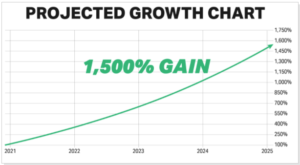

Lincoln National Corporation (NYSE: LNC), known as Lincoln Financial Group, is a life insurance and retirement services company that has recently seen a sharp rebound in its stock price. After a steep decline in late 2022 due to significant one-time charges and capital concerns, LNC’s stock nearly doubled during 2023 (irbank.net). This report examines the factors behind that surge, with a deep dive into the company’s dividends, leverage, coverage ratios, valuation, and the risks and red flags investors should consider. All information is source-grounded, drawing on company filings and authoritative financial data.
Dividend Policy and History
LNC currently pays a quarterly dividend of $0.45 per share, or $1.80 annualized (stockanalysis.com). Notably, the company has maintained this dividend level since early 2022 (stockanalysis.com), opting for stability during a period of financial repair. The last increase was in late 2021 when the payout was raised from $0.42 to $0.45 per quarter (stockanalysis.com). This conservative approach has kept the dividend intact even as the company navigated challenges, though growth has been modest – LNC’s dividend has increased by only about 1.9% annually over the last five years (hk.investing.com).
At the current stock price, LNC’s dividend yield is approximately 5% (stockanalysis.com). This is above the industry median (around 3.3%–3.5% for life insurers) (hk.investing.com), reflecting both the generous absolute payout and the past weakness in LNC’s share price. The dividend appears well-covered by underlying earnings in normal years. For example, in 2021 (prior to the one-off losses), net income was about $1.4 billion (cdn.yahoofinance.com) versus roughly $270 million in annual interest expense (cdn.yahoofinance.com) and $300 million in common dividends – indicating a comfortable cushion. Even after recent turmoil, LNC’s payout ratio remains moderate (roughly 20–30% of adjusted operating earnings, based on management’s non-GAAP metrics), suggesting the dividend is sustainable barring another severe decline in profits. Importantly, management chose to preserve the dividend through the 2022 crisis, pausing share buybacks instead (cdn.yahoofinance.com) (cdn.yahoofinance.com). This signals a commitment to shareholders’ income, though future dividend growth will likely depend on fully restoring the company’s financial strength.
Leverage and Debt Maturities
Like many insurers, LNC employs a combination of debt and equity in its capital structure. As of year-end 2025, the company had about $6.3 billion in long-term debt (excluding short-term maturities) (app.edgar.tools). Total debt including current portions was roughly $6.3–6.6 billion, against a total capital base (debt + equity) in the mid-teens of billions. This implies a debt-to-capital ratio on the order of 35–40%, higher than LNC’s longer-term target. In fact, LNC’s management has stated a goal of 25% leverage ratio (debt as a percentage of total capital) and recently took steps to move toward that level (www.lincolnfinancial.com). A strategic equity raise in 2025 (discussed later) was specifically aimed at deleveraging and improving financial flexibility (www.lincolnfinancial.com).
Debt maturities appear very manageable in the near term. In 2026, only a $400 million senior note (3.625% coupon) was due and has since been addressed (app.edgar.tools). The next significant maturity is a $150 million term loan due 2027 (app.edgar.tools). Beyond that, LNC’s remaining bonds and notes are largely long-dated, with no major bullet maturities until 2028 (when a $500 million note comes due) and others staggered through the 2030s (app.edgar.tools). The company even has some capital securities and subordinated debt maturing in 2066–2067, reflecting the long-tail nature of insurance liabilities (app.edgar.tools). The average coupon rates on LNC’s senior notes range from the low 3% area up to about 6% for the longest issues (app.edgar.tools), keeping interest costs moderate.
LNC’s interest expense was $262 million in 2021 and rose to about $283 million in 2022 (cdn.yahoofinance.com), partly due to higher rates on floating-rate debt and new borrowing. Even in a challenging 2022, the company’s operating earnings were enough to cover interest several times over (excluding the unusual charges). As a life insurer, LNC typically generates substantial cash flow from its in-force book, which can service debt comfortably under normal conditions. Additionally, the company maintains credit facilities and other liquidity sources to handle refinancing. Indeed, LNC tapped the debt markets in 2025 to refinance and bolster liquidity, issuing new long-term notes (e.g. $500 million of 2.33% notes due 2030 and $500 million of 5.35% notes due 2035) (app.edgar.tools). This proactive refinancing, along with the equity injection, has improved the maturity profile and reduced rollover risk.
It’s worth noting that rating agencies keep a close eye on LNC’s leverage. Following the 2022 losses, A.M. Best downgraded LNC’s credit ratings and cited “volatility in capital” and a need for stronger risk management in its rationale (news.ambest.com). Management’s response has been to fortify the balance sheet – halting buybacks, raising capital, and pledging to use excess earnings to reduce debt. These actions have had the desired effect: by 2023–2024, LNC’s statutory risk-based capital (RBC) ratio rebounded above 420%, exceeding its 400% target for solvency capital (www.marketscreener.com). In short, LNC has stabilized its balance sheet: near-term debt repayments are modest, and capital ratios are back in a healthy zone. Going forward, the company aims to continue deleveraging to ~25% debt-to-capital (www.lincolnfinancial.com), which should further strengthen its credit profile.
Coverage and Financial Performance
“Coverage” for an insurance company can refer to a few angles – coverage of obligations, interest coverage, or dividend coverage by earnings. In LNC’s case, interest coverage is a useful metric given the debt load. Prior to the recent turmoil, LNC’s earnings provided a strong buffer: for example, in 2021 the company earned $1.4 billion in net income (cdn.yahoofinance.com), roughly 5–6 times its interest expense that year. Even using a stricter measure like operating income before interest and taxes (EBIT), coverage was ample. However, 2022 flipped to a net loss as LNC absorbed a “significant GAAP unlocking charge” on its life insurance reserves (news.ambest.com). This one-off hit (over $2 billion in charges) temporarily wrecked coverage ratios – an extreme scenario where earnings didn’t cover fixed charges at all. The key question was whether such losses were recurring or an anomaly.
Fortunately for shareholders, 2022’s loss was largely driven by assumption updates and goodwill write-downs on a legacy block of universal life policies with secondary guarantees (news.ambest.com). These accounting charges, while painful, were taken to true-up reserves and reflect more conservative assumptions for that book of business. Adjusted operating earnings, which exclude such one-time and market-related items, remained positive. In 2023, LNC returned to profitability on a GAAP basis (albeit with some continued noise from market factors), and by 2024 it reported a surge in net income due to favorable market impacts (app.edgar.tools). For analytical purposes, management and analysts focus on adjusted operating income as a better gauge of ongoing performance. For instance, in Q1 2026, LNC’s adjusted operating income was $326 million (about $1.66 per share) (www.marketscreener.com), whereas net income was higher due to non-cash mark-to-market gains. This indicates that core earnings power is on the order of $1.3 billion annually (around $6–7 per share) under current conditions – more than sufficient to cover ~$300 million of interest and ~$320 million of common dividends.
From a solvency coverage standpoint, the improvement in RBC is a critical positive development. Management’s aggressive steps in late 2022 and 2023 – raising $1 billion of equity/preferred capital and scaling back capital-intensive sales – were specifically aimed at boosting the RBC ratio back above 400% (cdn.yahoofinance.com). These measures, combined with retained earnings, have rebuilt statutory capital. By early 2025, LNC estimated its RBC ratio to be comfortably above 420% (www.marketscreener.com), a level that provides a solid cushion above regulatory minimums and internal thresholds. In practical terms, this means LNC’s insurance subsidiaries have over four times the capital required by regulators for the risks they carry. Such capital coverage mitigates the risk of having to upstream cash to the holding company or, conversely, needing emergency capital infusions. It also gives management latitude to resume shareholder-friendly actions (like buybacks or dividend hikes) once conditions allow.
Another aspect of coverage is the dividend payout coverage by earnings or cash flow. As noted, LNC’s dividend payout ratio is relatively low on a normalized earnings basis – roughly 20–30% of operating earnings. In 2022, that ratio temporarily went sky-high due to the loss, but in more typical periods the dividend is well covered. LNC’s insurance operations generate strong cash flows from premiums and investment income. According to the 2022 cash flow statement, operating activities provided $4.0 billion of cash that year (cdn.yahoofinance.com) (cdn.yahoofinance.com), which was more than enough to pay claims, expenses, interest, and dividends. Even adjusting for fluctuations, the business produces the cash to support its shareholder payout. Thus, unless there is another shock to profitability, the dividend coverage appears solid.
In summary, LNC’s coverage ratios have rebounded alongside its earnings. Interest is being paid comfortably from operating profits, and capital adequacy metrics are back in line with peers. The one caution is that life insurers like LNC remain exposed to capital market swings – changes in interest rates, credit spreads, or equity markets can flow through to their balance sheets and income via reserve adjustments. LNC’s recent experience underscores that robust risk management is needed to keep those swings in check. The company has stated it is upgrading its hedging programs to better protect capital under stress (news.ambest.com) (news.ambest.com), which should help maintain strong coverage metrics going forward.
Valuation and Peer Comparisons
Despite its rally, LNC’s stock still appears cheap by traditional metrics. The shares trade around the 0.7–0.8× book value range on a GAAP basis (financhill.com), reflecting investor caution. Even on an adjusted book value (excluding Accumulated Other Comprehensive Income, which captures unrealized investment gains/losses), the multiple is modest – for example, as of early 2026, LNC’s book value per share excluding AOCI was about $69, meaning the stock at ~$35 is at ~0.5× “tangible” book (www.marketscreener.com). Such a discount is wider than many peers. Large competitors like Prudential Financial (PRU) and MetLife (MET) have historically traded closer to book value (or above, on an ex-AOCI basis), though they too saw valuations dip after 2022’s interest rate spike. LNC’s severe one-time charges and capital raise likely left a residue of skepticism, keeping its valuation depressed relative to more stable peers.
On an earnings basis, LNC’s price-to-earnings (P/E) ratio looks extremely low – roughly 4× trailing earnings (financhill.com). However, this figure is a bit deceiving, because 2024’s GAAP earnings were boosted by accounting gains (from interest rate movements and other market factors). A more normalized earnings run-rate might put LNC’s forward P/E in the high single digits. Still, even 8–9× earnings would be below the sector average. For context, the life insurance industry often trades around 8–10× earnings and 1× book in stable times. LNC’s discounted valuation thus suggests the market has not fully priced in a recovery to normal profitability – or it perceives higher ongoing risk for Lincoln versus peers.
LNC’s dividend yield of ~5% is another indicator of value. It is higher than the industry average, as mentioned, and in line with some top-tier peers that yield in the 4–5% range (jp.investing.com). This high yield, coupled with the low P/E, implies a level of investor wariness (a “cheap for a reason” scenario). Bulls might argue that as LNC proves its issues are behind it, the stock could re-rate upward – for instance, even moving to a P/E of 6–7× could mean substantial upside from current levels. Additionally, the successful execution of strategic initiatives (like the partnership with Bain Capital) could enhance earnings and asset yields, supporting a higher valuation. On the other hand, bears point to the company’s history of earnings volatility and the complex risks on its balance sheet as justification for a discounted price. In other words, LNC’s valuation reflects a classic turnaround story: high-risk, high-reward. The stock has already “soared” off its lows (nearly doubling in 2023) but still trades at a fraction of pre-crisis multiples, leaving room for further gains if confidence returns – or a pullback if results disappoint.
To put numbers in perspective, consider these valuation metrics for LNC as of mid-2026: a P/B of ~0.8× and dividend yield ~4.9% (financhill.com) (financhill.com). In comparison, Prudential (PRU) trades around 1× book and a 5% yield, while MetLife (MET) is near 1× book with a 3–4% yield (reflecting its aggressive share buybacks). LNC’s P/E ~4× (trailing) (financhill.com) is roughly half of Prudential’s (around 8×) and a fraction of the broader market’s. This deep value profile suggests that if LNC can sustain stable earnings and dispel the cloud of its 2022 missteps, there may be significant upside as the market normalizes its valuation. Conversely, the low valuation also means the bar is low – any stumble or resurgence of problems could keep the stock languishing. Investors essentially are pricing in a mix of skepticism and optionality: they see the potential, but they’re demanding a margin of safety given the scars of recent history.
Risks and Red Flags
While LNC’s outlook has improved, it’s crucial to recognize the risks and red flags that still surround the company:
– Legacy Liabilities and Assumption Risk: The events of 2022 highlighted a major red flag – LNC underestimated the cost of guarantees in certain life insurance policies (specifically, universal life with secondary guarantees). When assumptions about policyholder behavior and mortality were updated, LNC took a “significant unlocking charge” that wiped out a year’s earnings and more (news.ambest.com). This came with a $634 million goodwill write-down for that block (news.ambest.com). The fact that such a large miss occurred indicates a lapse in risk assessment. AM Best cited a downgrade in LNC’s enterprise risk management rating because of this “recent volatility in capital” and the reactive (rather than proactive) nature of how management had to shore up capital afterward (news.ambest.com). The red flag here is whether other reserve assumptions could prove deficient. LNC must continuously review long-term assumptions (e.g. longevity, lapse rates, investment yields) – any further big reserve hit would be a serious setback. Investors will want to see evidence that LNC’s models and hedging programs have been strengthened to prevent a repeat of 2022’s surprise (news.ambest.com).
– Market Sensitivity – Interest Rates and Investments: As a life insurer, LNC is heavily exposed to interest rate risk and market movements. Rising interest rates in 2022–2023 were a double-edged sword: they increase the yield earned on new investments (a positive for future earnings), but they also caused large unrealized losses on LNC’s bond portfolio (since bond values drop when rates rise). Those unrealized losses drove LNC’s GAAP book value sharply lower in 2022 (an $18 billion decline in AOCI) (app.edgar.tools), which can be concerning even if statutory capital isn’t directly affected. If interest rates continue to be volatile, LNC’s capital position and reported equity could swing accordingly. Additionally, the company’s new partnership with Bain Capital will channel more funds into private credit, mortgage loans, and other structured assets (www.nasdaq.com). While these asset classes can boost returns, they may carry liquidity and credit risks. A downturn in credit markets or illiquid assets could hurt LNC’s portfolio. In short, investment portfolio quality is a risk – credit defaults or a real estate slump would pressure earnings and possibly capital.
– High Financial Leverage (Though Improving): LNC’s financial leverage, at roughly 35–40% of capital post-2022, has been higher than many peers, a point of concern. The company is now actively reducing debt (targeting 25% leverage) (www.lincolnfinancial.com), aided by the $825 million equity infusion from Bain Capital for a 9.9% stake (www.lincolnfinancial.com) (www.lincolnfinancial.com). While this is a positive step, the red flag remains that LNC had to dilute shareholders and raise expensive capital under duress. Should another adverse scenario arise, the company might again face the tough choice of cutting dividends, raising capital on unfavorable terms, or both. The pause of share buybacks since late 2022 (cdn.yahoofinance.com) is a reminder that LNC’s priority is repairing the balance sheet. Until leverage comes down and ratings outlooks improve, LNC has less financial flexibility than insurers with leaner balance sheets.
– Credit Rating and Counterparty Risk: LNC’s core insurance subsidiaries are rated A by AM Best (downgraded from A+ in Nov 2022) (news.ambest.com) and have seen outlooks revised to negative during the crisis (news.ambest.com). While stabilization efforts are underway, any further downgrade could increase borrowing costs or unsettle policyholders/distributors. Also, as an insurer, LNC relies on reinsurance and derivative counterparties for risk transfer (for example, hedging variable annuity guarantees). If those counterparties fail or pull back (for instance, a reinsurer insolvency or a bank derivative counterparty under stress), LNC could be suddenly exposed. This is a less visible risk, but a real one – the company’s filings note reliance on letters of credit and reinsurance for capital efficiency (cdn.yahoofinance.com), meaning part of its risk is outsourced to others. Investors should keep an eye on the financial health of LNC’s reinsurers and hedging partners.
– Operational and Strategic Execution: Internally, LNC is undertaking cost savings and systems improvements (the *“Spark” initiative, which is a multi-year expense reduction program) (cdn.yahoofinance.com). Execution risk exists around achieving those savings without disrupting operations. Moreover, the strategic refocus – emphasizing less capital-intensive products and improving margins on existing business – must strike a balance with growth. If LNC pulls back too much on sales of life insurance or annuities to conserve capital, it could lose market share and distribution relationships that are hard to regain. Conversely, if it grows too aggressively, it could strain capital anew. Leadership changes are also worth noting: CEO Ellen Cooper took the helm in mid-2022, right before the storm hit, and has the task of regaining the market’s trust. Any instability or shifts in leadership could be a red flag, though so far management has been transparent about the challenges and remediation steps.
In summary, LNC has navigated out of immediate danger, but investors should remain vigilant. The 2022 episode exposed issues in risk management and capitalization that will take time to fully resolve. While current trends (higher interest income, stabilized mortality, etc.) favor LNC, the company’s complex liability profile means surprises can’t be ruled out. The stock’s low valuation reflects these overhangs – essentially the market saying “show me” in terms of consistent execution and risk control.
Conclusion and Open Questions
LNC’s dramatic stock surge off its lows can be attributed to renewed confidence that the company is overcoming its setbacks. The driving forces include: a return to profitability and solid adjusted earnings, decisive capital actions (raising equity and halting buybacks) that restored solvency ratios, and a favorable macro shift (higher interest rates improving future profit potential). The recent strategic partnership with Bain Capital, which brought in $825 million of new equity capital (www.lincolnfinancial.com), underscores that savvy investors see value in LNC’s franchise and are willing to bet on its long-term success. This infusion not only bolstered the balance sheet but also gives LNC access to Bain’s asset management expertise – potentially boosting investment yields on the company’s $300+ billion portfolio (www.nasdaq.com). In many ways, LNC’s story is one of a classic turnaround: it stumbled badly, took its medicine, and is now on a path to recovery with a stronger foundation.
Yet, it’s not a guaranteed happy ending. As we look ahead, a few open questions remain:
– Can LNC sustain earnings growth without new hiccups? The company’s adjusted operating ROE (return on equity) is still below pre-2022 levels. Will the combination of expense cuts (Spark initiative), re-priced products, and higher investment spreads drive ROE back up to a teens percentage? Or are there lingering drags (e.g. older blocks running off, competitive pressures in pricing) that will keep profitability subdued?
– When and how will capital returns to shareholders resume? LNC’s stock surge has come without buyback support (repurchases are still paused) (cdn.yahoofinance.com). If the company hits its 25% leverage goal, will it restart buybacks or a dividend raise? The timing of that could signal management’s confidence. Conversely, if capital deployment stays conservative, it may indicate a lingering need to hoard capital – something shareholders will watch closely.
– How effective will the Bain Capital partnership be? LNC is touting the Bain deal as a way to “[access] high-quality private asset classes” and enhance returns (www.nasdaq.com). It sounds promising, but execution is key. Will this translate to a measurable uptick in investment income without taking on outsized risk? Also, Bain now owns nearly 10% of LNC (www.lincolnfinancial.com) – how will this influence corporate governance or strategic direction? The alignment seems positive so far, but large new shareholders can bring new dynamics.
– What is the long-term strategy for the problematic legacy businesses? LNC has some options to lower risk – for example, it could pursue additional reinsurance deals to offload old universal life liabilities or even explore a runoff or sale of certain blocks. Are such moves on the table? Management has not publicly outlined plans beyond strengthening hedges for the variable universal life block (news.ambest.com). Investors may press for more clarity on whether LNC will continue to manage those liabilities in-house or seek outside solutions.
– External factors and regulatory changes: How will LNC fare under evolving regulatory regimes? The NAIC is constantly updating capital requirements and reserving standards. Also, could there be any implications from broader economic conditions (e.g. a recession impacting life insurance sales or causing higher disability claims in the Group segment)? LNC’s Group Protection arm, for instance, benefited from favorable claims trends recently – will that normalize? Additionally, tax law changes (like the new 15% corporate alternative minimum tax) (cdn.yahoofinance.com) and any future government policy on retirement savings could impact LNC’s products (annuities, 401(k) services, etc.). These are open questions that add uncertainty to long-term forecasts.
In closing, Lincoln National’s resurgence has been impressive, but it came after confronting serious challenges. The stock’s surge reflects both the relief that LNC survived its crisis and optimism that a leaner, better-capitalized Lincoln can thrive going forward. The company now offers a compelling mix of a hefty dividend, improving financial metrics, and a bargain valuation – a combination that can yield further upside if management delivers. However, the scars of 2022 remind us that in the insurance business, risk lurks beneath the surface. Prudent investors will continue to monitor LNC’s capital strength, risk management actions, and strategic execution to ensure that this phoenix-like rise is built on a durable foundation. The next few quarters – and how the company addresses the open questions above – will be crucial in determining whether Lincoln’s comeback has truly taken hold, or whether caution is still warranted for this high-yield, high-potential stock.
(stockanalysis.com) (stockanalysis.com) (cdn.yahoofinance.com) (news.ambest.com)
For informational purposes only; not investment advice.