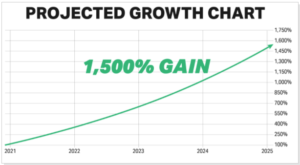

Domino’s Pizza (NYSE: DPZ) has recently grabbed investors’ attention with a notable stock surge, underscored by strategic moves to reignite growth. In mid-2023, Domino’s shares jumped about 10% in one day after the company announced a partnership with Uber Eats – a significant shift for a chain that long shunned third-party delivery apps (m.investing.com) (m.investing.com). This report will dive into the key fundamentals driving Domino’s investment case, including its robust dividend policy, leveraged balance sheet, valuation metrics, and the risks and open questions that investors should keep in mind.
Dividend Policy & Shareholder Returns
Domino’s has a shareholder-friendly capital return policy, combining consistent dividend growth with aggressive share buybacks. The company has been paying and growing dividends for years, with particularly strong increases of late. In early 2024, Domino’s board approved a 25% hike in its quarterly dividend to $1.51 per share (ir.dominos.com). As a result, Domino’s paid out $6.04 in dividends per share for full-year 2024, up from $4.84 in 2023 and $4.40 in 2022 (fintel.io). This rapid dividend growth has elevated the stock’s yield to roughly 2.6% at recent prices (stockanalysis.com) – a competitive yield in the restaurant sector. Notably, the dividend remains well-covered, at about one-third of earnings (2024 EPS was $16.83 (fintel.io)) and a similar fraction of free cash flow, leaving room for further increases.
In tandem with dividends, Domino’s returns cash via share repurchases, which have significantly reduced the share count over time. In 2023, for example, the company repurchased and retired about $269 million of its stock under board authorization, alongside $169.8 million in dividend payments (fintel.io). In early 2024, management topped up the buyback program with an additional $1.0 billion authorization (ir.dominos.com), reflecting confidence in the business. These combined payouts have approximated Domino’s annual free cash flow, demonstrating a commitment to returning excess cash to shareholders. However, investors should monitor that such payouts remain sustainable given the company’s debt load (discussed next).
Leverage, Debt Maturities & Coverage
One of the most striking aspects of Domino’s financial profile is its high leverage. The company employs a whole-business securitization financing structure – essentially funding itself with a series of fixed-rate notes backed by Domino’s franchise royalties and other cash flows. As of year-end 2024, Domino’s had approximately $5.0 billion in total debt outstanding (fintel.io). This debt is significant relative to earnings – about 5× Consolidated Adjusted EBITDA, by the company’s own leverage metric – but it has been manageable so far under steady cash flows. Domino’s interest coverage is healthy (2024 operating profit was roughly 5× its ~$179 million interest expense) and the weighted average interest rate is modest at ~3.8% on these notes (fintel.io).
Debt maturities, however, pose a key focus for investors. Domino’s faces a wall of principal payments due in the coming years. Under the terms of its securitized notes, the anticipated repayment schedule includes about $1.18 billion coming due in 2025, only ~$39 million in 2026, then a hefty $1.31 billion in 2027 and $817.9 million in 2028 (fintel.io). In other words, more than half of Domino’s $5 billion debt will need refinancing or repayment by 2027–2028. The company does maintain undrawn variable funding notes (revolving credit facilities) for additional liquidity, but those were unused as of 2024 year-end (fintel.io) (fintel.io). With interest rates higher today than when many of Domino’s notes were issued, refinancing could raise interest costs going forward.
Importantly, Domino’s securitized debt comes with covenants that bind its financial flexibility. The debt indenture requires maintenance of a minimum debt service coverage ratio of 1.75× (cash flow to debt service) and a maximum total debt-to-EBITDA ratio of 5.0× (fintel.io) (fintel.io). Staying under these limits is crucial – failing the tests could trigger a requirement to divert cash to accelerated debt repayment (and restrict dividends or buybacks) (fintel.io). As of now, Domino’s is in compliance; its leverage and coverage metrics are hovering around those thresholds (roughly 4.9× leverage and 5× interest coverage by recent results). Investors should monitor EBITDA trends and interest rate changes closely, since a drop in earnings or jump in interest expense could tighten the headroom on these covenants. The upcoming 2025 debt maturity will be an important inflection point – successful refinancing on reasonable terms is needed to keep Domino’s capital-return machine humming.
Valuation and Growth Profile
After the recent rally, Domino’s stock trades around $300 per share (stockanalysis.com). Based on 2024 results, this puts the trailing price-to-earnings ratio near 18× (using $16.83 EPS) (fintel.io). That valuation is roughly in line with the broader market and a bit below some large fast-food peers, reflecting Domino’s moderate growth outlook and high leverage. In enterprise value terms (factoring in debt), the stock is closer to a mid-teens EV/EBITDA multiple, which is reasonable for a dominant franchise operator.
Domino’s growth profile has been a mix of slight same-store sales increases and robust new unit expansion. In FY2023, U.S. same-store sales rose just 1.6% (international same-store sales +1.7%), but the brand added a net 711 stores worldwide (ir.dominos.com). Excluding the one-time closure of its Russia franchise operations, net global store growth was actually 870 stores in 2023 (ir.dominos.com) – about a 6% unit growth rate. This franchise-driven expansion (Domino’s now has over 20,000 stores globally) fuels top-line growth even when individual store comps are modest. Looking ahead, analysts expect low- to mid-single-digit revenue growth from continued unit growth and menu innovation, and high-single-digit earnings growth as efficiency improves. The current valuation does not appear stretched for these expectations; however, it also suggests the market isn’t pricing in a big acceleration in growth either. If Domino’s initiatives – such as its new delivery partnership – can materially boost sales, there could be upside to earnings estimates. Conversely, any stumble in execution or macro headwinds could make the stock’s multiple look less attractive.
Key Risks & Red Flags
Despite its strengths, Domino’s faces several risks and red flags that investors should not ignore:
– Heavy Debt Load and Refinancing Risk: As noted, Domino’s carries substantial debt and faces large maturities in the next 1–3 years. This exposes the company to refinancing risk. If credit markets tighten or interest rates stay elevated, Domino’s could see higher borrowing costs that eat into earnings. The company’s leverage also limits financial flexibility – in a downturn, high fixed charges could become a burden. A breach of debt covenants (e.g. if EBITDA falls and leverage rises above 5×) could force Domino’s to suspend shareholder payouts and aggressively pay down debt (fintel.io). This worst-case scenario hasn’t materialized, but the margin for error is thinner with a levered balance sheet.
– Slowing Delivery Sales & Competition: Domino’s phenomenal growth in the 2010s was driven by tech-enabled delivery and aggressive promotions. Lately, however, delivery segment sales have stagnated. Domino’s revealed that its U.S. delivery same-store sales fell 2.1% in Q1 2023 (m.investing.com), even as carryout (pick-up) orders grew. Management acknowledged that higher delivery fees were hurting demand, and that the company lost some market share to rivals on third-party apps (www.foxbusiness.com) (fortune.com). In fact, by mid-2023, delivery apps like Uber Eats and DoorDash grew to account for 14% of U.S. pizza sales (vs. just 4% pre-pandemic) (fortune.com) – a trend that Domino’s could not ignore. The decision to finally partner with a delivery aggregator (Uber Eats) is an attempt to revive delivery growth, but it comes with risks: platform commissions could pressure franchisee margins, and Domino’s gives up a measure of direct customer control and loyalty by playing in the open aggregator marketplace.
– Cost Inflation and Franchisee Health: Domino’s asset-light model relies on the health of its franchisees. Many franchisees are grappling with higher food, labor, and fuel costs, which squeeze their profitability. Domino’s itself felt this in its supply chain division – the company had to lower prices by ~1.7% on supplies sold to franchise stores in late 2023 to help operators, which dented its own supply chain revenue (www.foxbusiness.com). High food inflation (cheese, flour, etc.) or wage inflation can thus hurt Domino’s indirectly by straining its franchisees or forcing the company to absorb cost relief measures. If franchisee economics become unattractive, store expansion and refurbishments could slow, undermining Domino’s growth engine.
– Intense Market Competition: The pizza and broader quick-service restaurant (QSR) market remains highly competitive. Aside from the usual pizza rivals (Papa John’s, Pizza Hut, Little Caesars, plus countless local pizzerias), Domino’s vies with fast-food and delivery options of all kinds. Consumers have many choices, and promotional activity is heavy in the industry. Domino’s will need to continuously invest in marketing (e.g. its long-running mix-and-match deals) and menu innovation (e.g. new side items or tech gimmicks) to drive traffic. Any slip in value perception or product quality could quickly send customers elsewhere. Notably, Domino’s “fortressing” strategy – opening many stores to reduce delivery times – could start to cannibalize sales at some point if regions become oversaturated, a risk the company monitors.
– Execution Risks: Domino’s prides itself on operational excellence, especially in technology (online ordering, apps) and delivery efficiency. Execution hiccups, however, can pose red flags. For instance, the company’s own ordering system outages or slowdowns could hurt sales on big days. Cybersecurity is also a concern; a breach of Domino’s customer or payment data would damage trust (fintel.io) (fintel.io). Additionally, the Uber Eats partnership rollout needs smooth execution – if integrations or pilot markets falter, the anticipated sales boost may be delayed. There’s also some strategic U-turn risk signaled by the Uber deal: having to reverse a long-held stance (Domino’s once insisted third-party delivery wasn’t needed) could indicate prior missteps. Investors will be watching how management navigates this change and whether it can maintain profit margins while expanding channels.
Open Questions and Outlook
Looking ahead, there are a few open questions that will shape Domino’s investment narrative:
– Will the Uber Eats partnership pay off? Early in 2024, Domino’s began rolling out ordering via Uber’s delivery apps in the U.S., with Domino’s own drivers fulfilling the orders (m.investing.com). The company expects this move to jolt its sluggish delivery segment by tapping new customers who favor third-party apps. The key question is whether the extra sales volume will outweigh the commission fees paid to Uber. If the partnership can add substantially to Domino’s top-line (management reportedly targets up to $1 billion in incremental sales from aggregator channels) while keeping franchisees profitable, it could re-energize U.S. same-store sales. Investors will be watching order volumes and franchisee feedback from this rollout. Success could lead Domino’s to expand aggregator partnerships (the Uber deal is exclusive through 2024 (m.investing.com), but after that Domino’s could potentially join other platforms). Conversely, if most Uber-orders turn out to be existing customers shifting from Domino’s app to Uber, the net benefit may disappoint.
– How will Domino’s navigate its 2025 debt hurdle? With $1.18 billion due in 2025 (fintel.io), Domino’s will soon need to refinance or pay down a large tranche of notes. The outcome of that refinancing – interest rate, term, and market receptivity – will be a major factor in the company’s cash flow allocation. A successful refinancing at a reasonable rate would alleviate a big uncertainty. However, if credit conditions are tight, Domino’s might opt to temporarily slow share buybacks or dividends to conserve cash for debt obligations. The balance between rewarding shareholders and managing debt prudently will be an important strategic decision in the next year.
– Can the growth strategy deliver “Hungry for MORE”? Domino’s management has laid out a “Hungry for MORE” strategy aiming for “MORE sales, MORE stores, and MORE profits.” The store growth portion has been solid – Domino’s continues to expand globally, including in underpenetrated markets. But open questions remain around same-store sales momentum and margin expansion. Will we see a meaningful uptick in U.S. same-store sales beyond low-single-digits, especially as delivery hopefully rebounds? Can international markets accelerate (some large markets like Europe and Japan have been slow-growing)? Additionally, what is the next area of innovation for Domino’s? The company has dominated in digital ordering and delivery; now that others have caught up via apps and third-party services, Domino’s may need new differentiators. Any clues – be it menu upgrades, faster delivery tech (drones? autonomous vehicles?), or new daypart offerings – could signal upside to the growth outlook.
– Is the high-leverage model here to stay? Domino’s has clearly used leverage as a tool to boost equity returns, borrowing at low rates to fund buybacks and dividends. This strategy has rewarded shareholders handsomely over the years. An open question is whether management will continue on this path or moderate leverage going forward. If interest costs rise substantially, Domino’s might decide to deleverage gradually (for instance, by issuing less debt than it repays, or pausing buybacks to reduce net debt). Thus far, management appears comfortable with the status quo – emphasizing that even after returns to shareholders, they generate enough cash to service debt comfortably (fintel.io) (fintel.io). Investors should watch for any tone shift on leverage in coming quarters, especially around the refinancing event. A more conservative capital structure could lower risk but might also slow the pace of shareholder returns, so it’s a delicate trade-off.
Bottom Line: Domino’s Pizza has proven to be a resilient, cash-generative business with a shareholder-oriented management. The recent stock surge, catalyzed by a strategic pivot to embrace delivery apps, highlights both the company’s opportunity and its adaptability (m.investing.com) (m.investing.com). Going forward, Domino’s offers a mix of steady income (2.5%+ yield), growth potential (global unit expansion), and inherent risks (leverage and industry competition). For investors, the key insights boil down to execution and balance: Domino’s must execute on reigniting sales (especially delivery) while carefully balancing its use of debt and capital returns. The company’s track record is strong – 15+% annual shareholder returns over the past decade testify to its winning formula – but today’s challenges mean due diligence is as important as ever. Keep an eye on those debt refinancings, same-store sales trends, and the impact of strategic initiatives. Domino’s has navigated many slices of change in the past, and how it tackles the next slice will determine if the stock’s recent surge has more room to run or if investors should prepare for a cooler quarter ahead.
For informational purposes only; not investment advice.